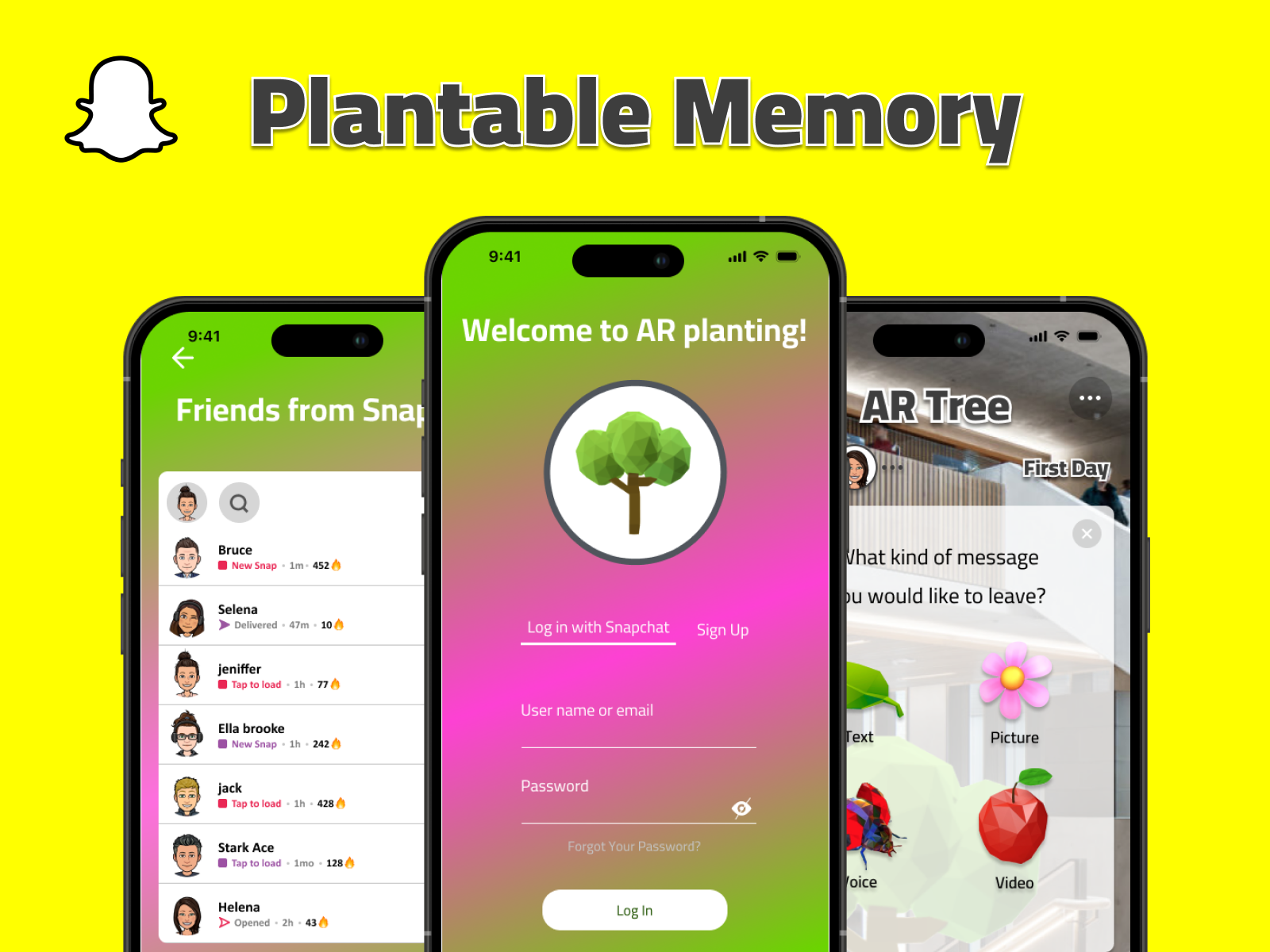
Plantable Memory was an industry–academia collaboration between Snap Inc. and UCL during my MSc in HCI. I designed an AR experience that turned personal messages into virtual tree elements like leaves, flowers, and fruit, each representing a shared memory. I led the process from concept and research to UX/UI design and Lens Studio prototyping, blending interaction design with narrative storytelling.
Client
Snap Inc.
My Role
Product Designer
Category
AR Product Design
Date
October 5, 2022
Overview
Through user research and iterative testing, I refined the concept for clarity and emotional resonance. I mapped different message types to distinct visual elements, creating an intuitive interaction model that made the experience playful, personal, and easy to use. The final prototype demonstrated how AR can turn messaging into a living, collaborative memory space.
Objectives
Develop an engaging platform that simplifies organising meetings and enhances personal connections.
Integrate AR technology to create immersive and personalised user experiences.
Encourage creative and meaningful interactions through diverse messaging options.
Scope of Work
Concept Development & Research: I began by defining the project goals and exploring different ideas for connecting people through AR. I surveyed potential users and interviewed friends to gather insights. For example, I discovered that many loved the idea of a virtual tree but were concerned it might be too complicated to use. These insights guided me to focus on simplicity in the concept.
Idea Evaluation: I generated several concepts and then used tools like SWOT analysis and a decision matrix to evaluate them. This structured approach helped me choose the most promising idea (the collaborative AR tree) by comparing factors like ease of use, creativity, and technical feasibility.
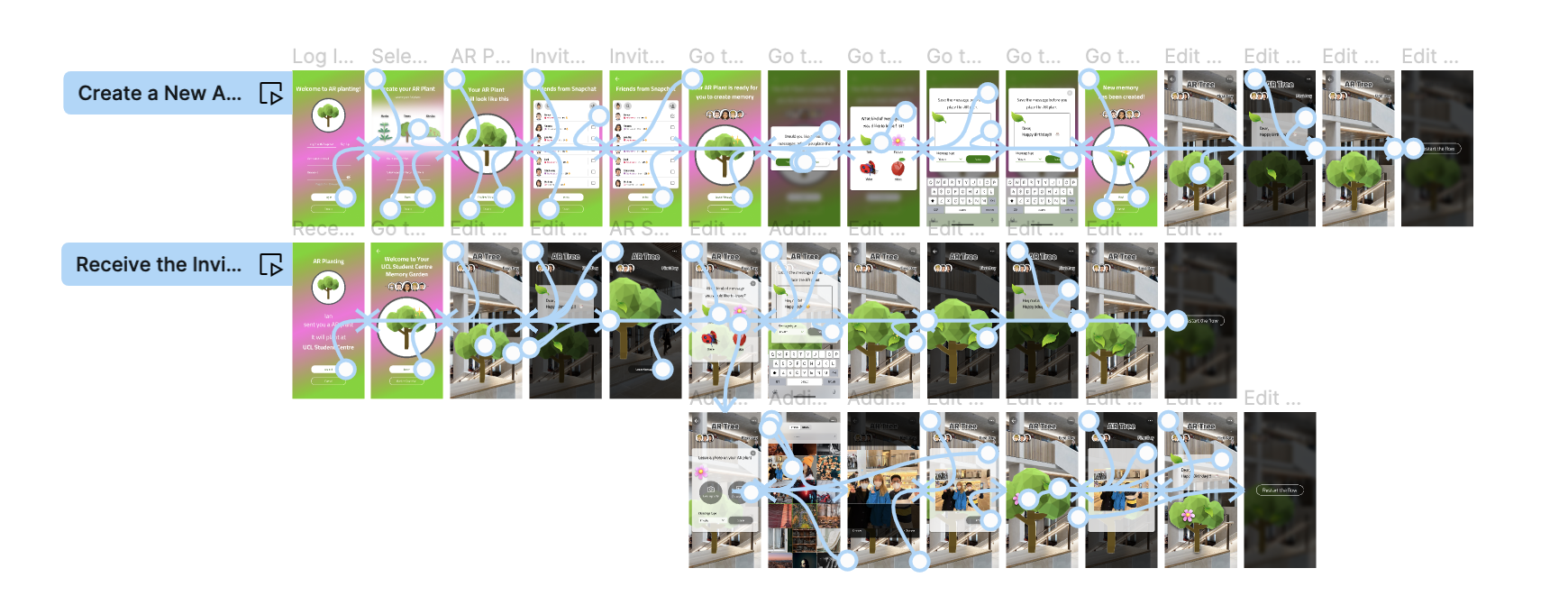
UX Design & Prototyping: Once the concept was set, I dived into UX design. I sketched out user flows and created wireframes to map how people would plant a memory and add to it. After refining the flow, I built an interactive prototype to test the core interactions, making sure things like adding a message or viewing the AR tree felt intuitive and fun.
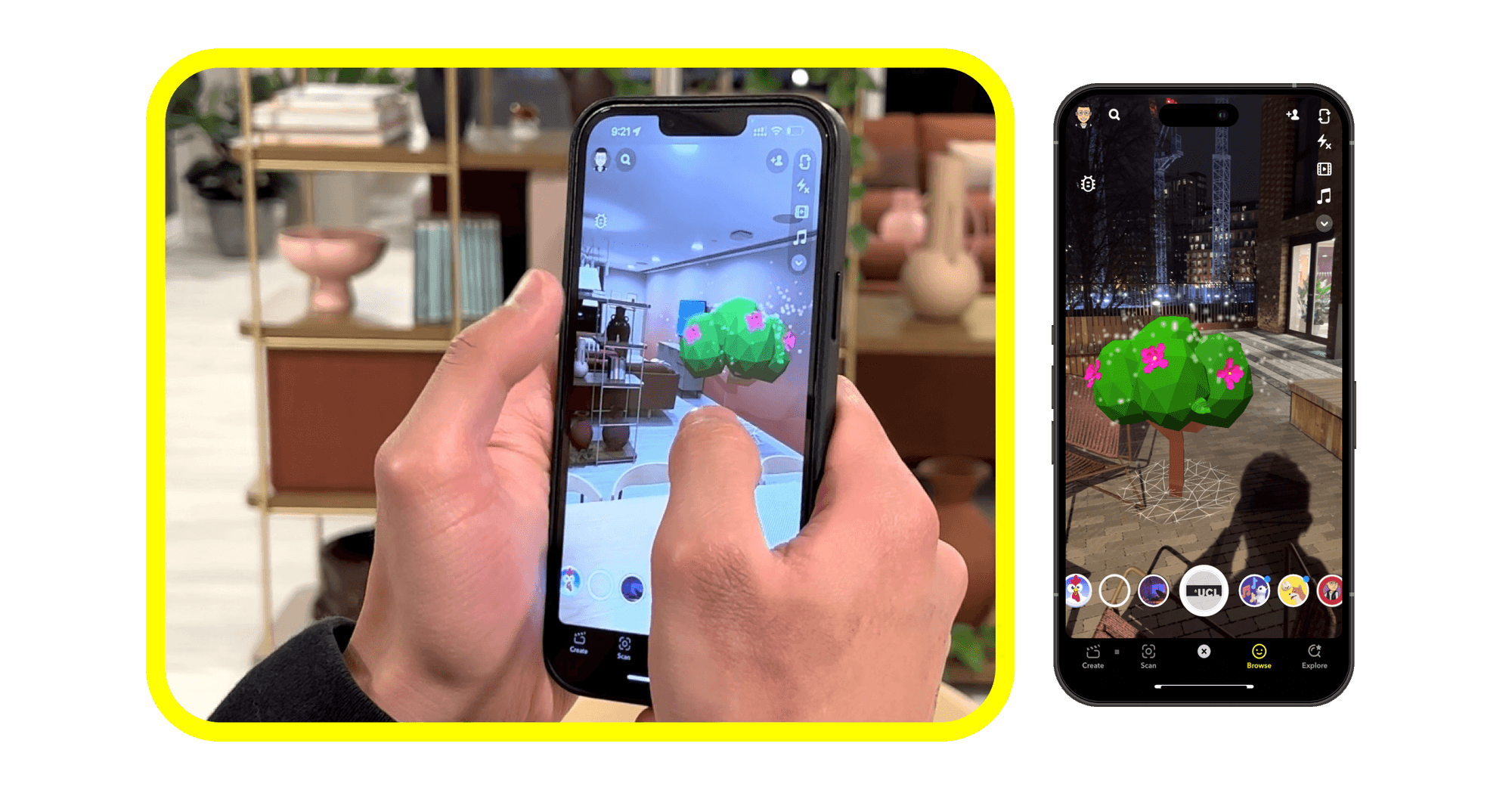
AR Development: I used Snap Lens Studio to bring the experience to life in AR. This involved creative coding, such as making the virtual plants respond to inputs like a new message, and integrating features like social sharing and location tagging. I iterated on the AR effects to ensure the tree and its elements appeared smoothly and delightfully in the real world.
User Journey & Engagement Mapping: I mapped the user journey in detail, starting from the moment someone receives an invite through to the point where the tree is fully grown. I identified key engagement points, marked in purple on the journey map, where the experience needed to feel especially rewarding. One example was the first time a new leaf appeared as the result of a friend’s message. This mapping helped ensure the experience remained engaging from start to finish.
Key Takeaways
Design with users, not just for users: By involving potential users early through surveys and informal testing of the idea, I recognised the importance of simplicity. Their feedback kept me grounded. It can be tempting to get carried away with a complex AR concept, but the ultimate goal is to ensure the experience is easy and enjoyable for people to use.
AR can enrich storytelling: Working on Plantable Memory showed me how AR, when used purposefully, can turn a simple interaction (like sending a message) into something magical. It reinforced my belief that emerging tech should elevate the human experience, not distract from it. Seeing friends get delighted when their message ‘grew’ into a leaf was a rewarding proof of that.
Plan thoroughly, but stay creative: I learned to balance structured planning with creative experimentation. The thorough research and journey mapping were my roadmap, but I also stayed open to fun ideas (like the animated invite seed) that came up along the way. This project taught me that innovation happens when preparation meets a bit of playfulness.
Goal
Plantable Memory aims to provide users with an engaging platform to organise meetings and foster connections in a seamless manner. Users can choose from a variety of trees and specify the meeting location. They can also invite their friends, who will receive delightful animated invitations featuring a symbolic bird carrying a seed. These invitations include meeting details and offer a straightforward option for friends to accept or decline.
Once the invitation is accepted, users can explore augmented reality (AR) plants and personalise messages, saving them for the designated meeting time and location. Plantable Memory has been designed to accommodate four input types, each creatively transforming messages into leaves, flowers, insects, or fruit, depending on their nature. Our goal is to create an innovative and user-friendly experience that simplifies the process of organising meetings whilst adding a touch of creativity and personalisation to every interaction.
Design Process
Phase 1 - Project Initiation Define project goals, target users, and the app's purpose.
Phase 2 - User Research and Concept Development Gather insights through surveys and interviews. Identify pain points, like plant care concerns. Create the core concept of "Plantable Memory" with key features.
Phase 3 - Idea Evaluation and UX Design Assess and select the preferred app idea. Design user-friendly interfaces, wireframes, and prototypes.
Phase 4 - AR Design Development and Features Utilise Snap Lens Studio to implement AR components, message transformation, and an invitation system. Enable social integration, location-based features, and meeting details.
Phase 5 - User Engagement Strategies and Journey Mapping Plan user engagement methods. Analyse user experiences and tailor the app accordingly.
Phase 6 - Prototype Development Prototype Development: Create a working UI prototype.
SWOT Analysis
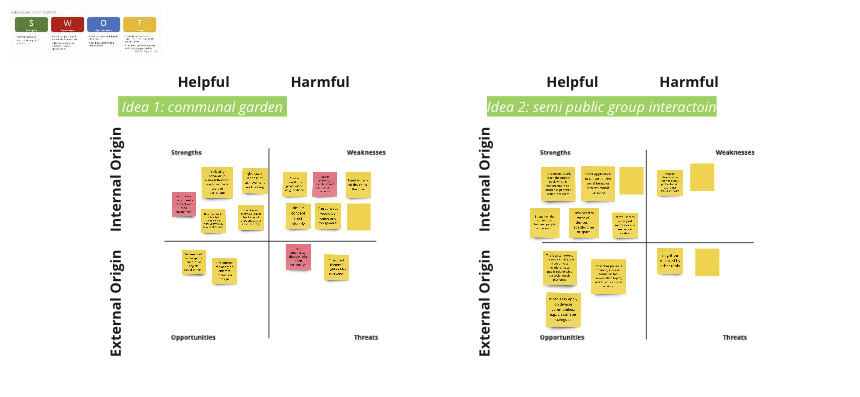
We conducted a comprehensive SWOT analysis to evaluate two distinct ideas, aiming to uncover their unique strengths and limitations. During our research, we unearthed a significant pain point concerning the apprehension many people have about caring for natural plants.
Idea 1: addressed this concern by transforming natural plants into captivating augmented reality (AR) images. This innovative approach created a virtual shared gardening experience, encouraging user engagement through behaviour tracking. However, it appeared to prioritise virtual interactions, potentially raising questions about its relevance in fostering face-to-face communication.
Idea 2: emerged as an engaging concept that skillfuly bridged online social behaviours with real-world interactions in specific locations. It cleverly harnessed the power of plants to fortify physical connections between individuals and predefined scenarios. Nevertheless, we acknowledged a potential challenge: the need for continuous motivation to ensure users remain engaged, given the concept's relatively shorter product life cycle.
These insights and evaluations were instrumental in shaping our UX design portfolio project, helping us craft an innovative and user-centric solution to address these considerations effectively.
Decision Matrix
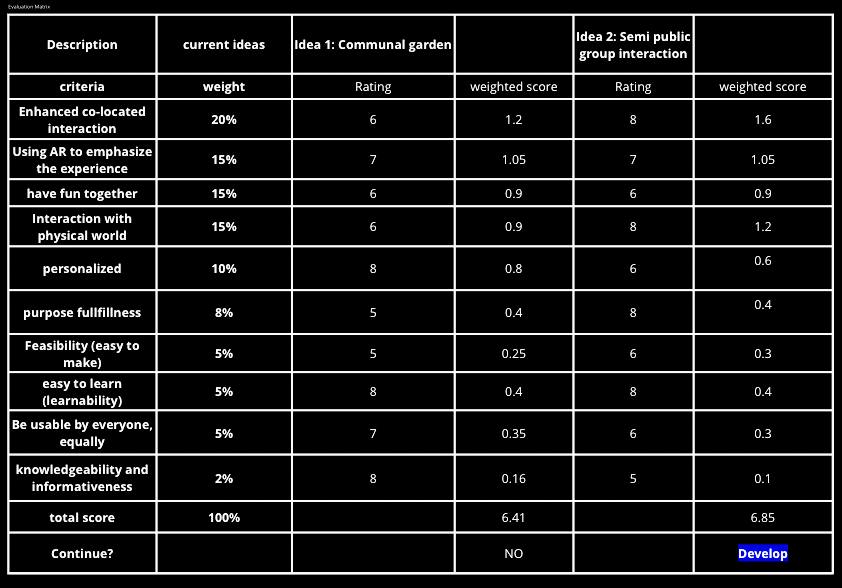
We assessed two concepts using a Decision Matrix comprising ten criteria rooted in Snap challenges. These included "enjoyment in group activities" and "maximising AR technology." Additionally, we considered specific product criteria like "meeting its intended purpose," "practicability," and "user-friendliness."
To align with the challenge's objectives, we assigned weights to these criteria, emphasising factors such as "enhanced in-person interaction," "maximising AR technology," "fostering shared enjoyment," and "integrating with the real world." Impressively, Idea 2 garnered a significantly higher overall score, signalling its potential to sustain meaningful connections among individuals in physical spaces, heightening emotional engagement within the real-world environment.
Prototype
Feel free to play around the prototype below ✨
Lens Studio Working Prototype
Reflection
As a UX Designer, I led a project called "Plantable Memory" that aimed to create an augmented reality (AR) product to foster connections and co-create memories. The project went through various stages, including concept development, user research, and idea evaluation. Ultimately, our team chose a concept that combined AR and plant-based interactions to address user concerns and encourage connections.
Our design process involved creating user-friendly interfaces, wireframes, AR integration, and an invitation system. We used a Decision Matrix to evaluate and refine our ideas, ultimately identifying Idea 2 as the stronger choice. To bring the concept to life, I created interactive prototypes.
Through the "Plantable Memory" project, I demonstrated my ability to seamlessly integrate user research and innovative design to create a user-centric and engaging platform for personal and organisational interactions.